
A professional website can make a big difference for a small business. Web development for small businesses is not only about creating attractive web pages; it is about building a website that is easy to use, works well on different devices, loads quickly, and helps customers find the information they need. A well-developed website can also support marketing, build trust, and create new opportunities for business growth.
For small businesses, the goal should be simple: create a website that represents the brand professionally and makes it easy for visitors to take action.
What Is Web Development?
Web development is the process of creating and maintaining a website. It includes everything from the structure and functionality of a website to its performance, security, and user experience.
A website may look simple from the outside, but several elements work together behind the scenes. Depending on the business, a website can include service pages, contact forms, product listings, booking features, blogs, and other useful functions.
For a small business, web development should focus on practical needs rather than unnecessary features. The website should support the business and make it easier for customers to interact with the brand.
Why Do Small Businesses Need a Website?
Customers often search online before deciding whether to contact a business. Without a professional website, a business may miss opportunities to reach those potential customers.
A good business website can help you:
- Build credibility and trust.
- Explain your products or services.
- Reach customers beyond your local area.
- Generate inquiries and leads.
- Support your digital marketing efforts.
- Provide information 24/7.
A website also gives a business more control over its online presence. Instead of depending only on social media platforms, you have a dedicated place where customers can learn about your brand and services.
What Does Web Development for Small Businesses Include?
Every business has different requirements, but most small business websites need a few essential elements.
Clear and Simple Navigation
Visitors should be able to find important information without searching through complicated menus. Pages such as Home, About, Services, Blog, and Contact should be easy to access.
Good navigation improves the user experience and helps visitors move through your website naturally.
Responsive Design
People use smartphones, tablets, laptops, and desktop computers to browse websites. A responsive website adjusts its layout according to the screen size.
This means your content should remain readable and your buttons should be easy to use regardless of the device.
For small businesses, responsive design is especially important because a poor mobile experience can cause potential customers to leave the website.
Fast Loading Speed
Nobody likes waiting for a slow website to load. Large images, unnecessary scripts, poor hosting, and unoptimized files can affect website speed.
A fast website provides a better experience and can also support search engine performance. Images should be optimized, unnecessary elements should be removed, and the website should be built with performance in mind.
Secure Website
Website security should not be ignored, even if you run a small business. Security measures such as HTTPS help protect information exchanged between visitors and your website.
Regular updates, secure hosting, strong passwords, and proper maintenance can also reduce common security risks.
SEO-Friendly Structure
A website should be built with search engines and users in mind. An SEO-friendly structure makes it easier for search engines to understand your pages.
Important elements include:
- Descriptive page titles.
- Proper heading structure.
- Clean URLs.
- Optimized images.
- Internal links.
- Mobile-friendly pages.
- Useful and relevant content.
Good web development creates a strong foundation, while ongoing SEO helps improve visibility in search results.
How Good Web Development Supports Business Growth
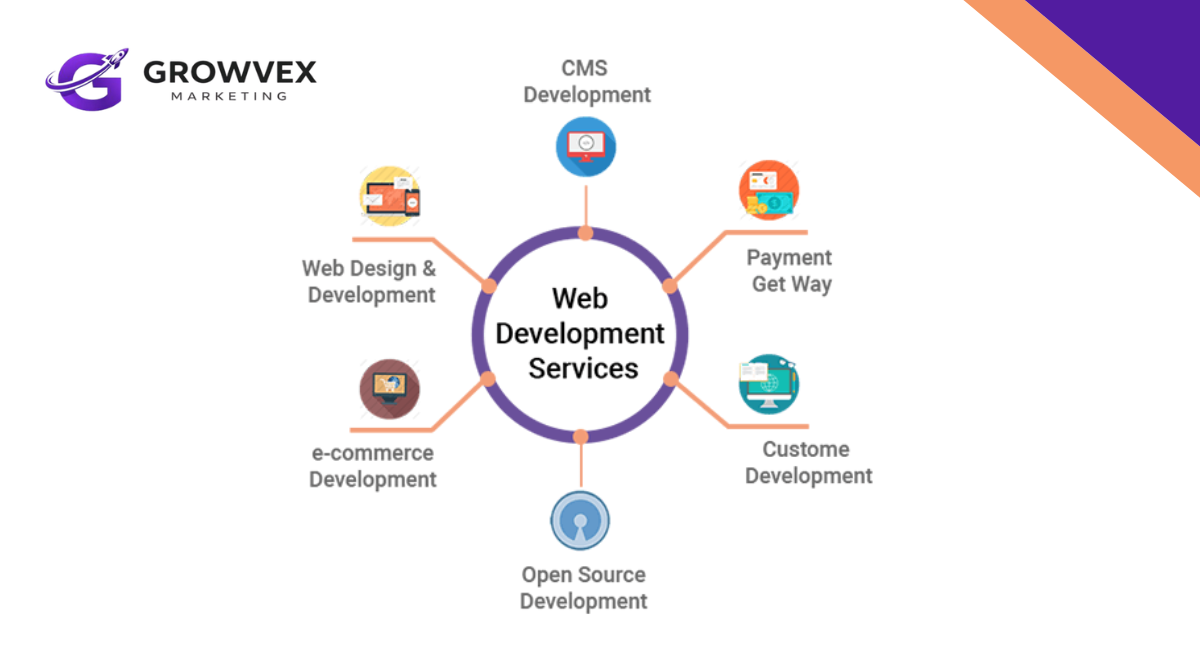
Web development for small businesses is more than creating an online business card. When a website is planned properly, it can become an important part of your marketing strategy.
For example, a service-based business can use its website to explain its services, display customer reviews, answer common questions, and provide an easy way to request a quote.
An eCommerce business may need product pages, shopping carts, payment options, and order management.
This is why the website should be developed around the actual needs of the business rather than simply following a standard template.
Clear Calls to Action Matter
A visitor may like your website but still leave if they do not know what to do next.
A call to action (CTA) guides visitors toward the next step. Depending on your business, this could be:
- Contact us
- Request a quote
- Book a consultation
- Get started
- Shop now
- Learn more
CTAs should be clear and placed where they make sense within the customer journey.
The Web Development Process
Understanding the development process can help small business owners know what to expect when starting a website project.
1. Planning
The first step is understanding the business, target audience, goals, and required features. This helps determine what type of website is suitable.
2. Design
The design stage focuses on the visual appearance and user experience. Layout, colors, typography, navigation, and page structure are planned at this stage.
3. Development
Once the design is approved, developers build the website and add its required functionality.
4. Testing
Before launch, the website should be tested on different devices and browsers. Forms, buttons, links, navigation, loading speed, and other functions should also be checked.
5. Launch and Maintenance
After testing, the website can go live. However, development does not necessarily end at launch. Regular updates, security checks, performance improvements, and content changes help keep the website working properly.
How to Choose the Right Web Development Service
Choosing a developer or agency is an important decision for a small business. The cheapest option is not always the best choice, and a complex website is not always necessary.
Before choosing a service provider, consider:
- Their previous work and portfolio.
- Experience with business websites.
- Understanding of responsive design.
- SEO-friendly development practices.
- Website security and performance.
- Communication and support.
- Ability to customize the website according to your needs.
A good development partner should first understand your business and then recommend a solution that fits your goals and budget.
Professional Web Development for Small Businesses
At Growvex Marketing, we understand that every business has different website requirements. Our web development approach focuses on creating websites that are professional, responsive, user-friendly, and aligned with business goals.
From website structure and responsive layouts to performance, functionality, and SEO-friendly development, we focus on building a strong online foundation for growing businesses.
Whether you need a new business website or want to improve an existing one, choosing the right development approach can help you create a better experience for your customers.
Common Web Development Mistakes to Avoid
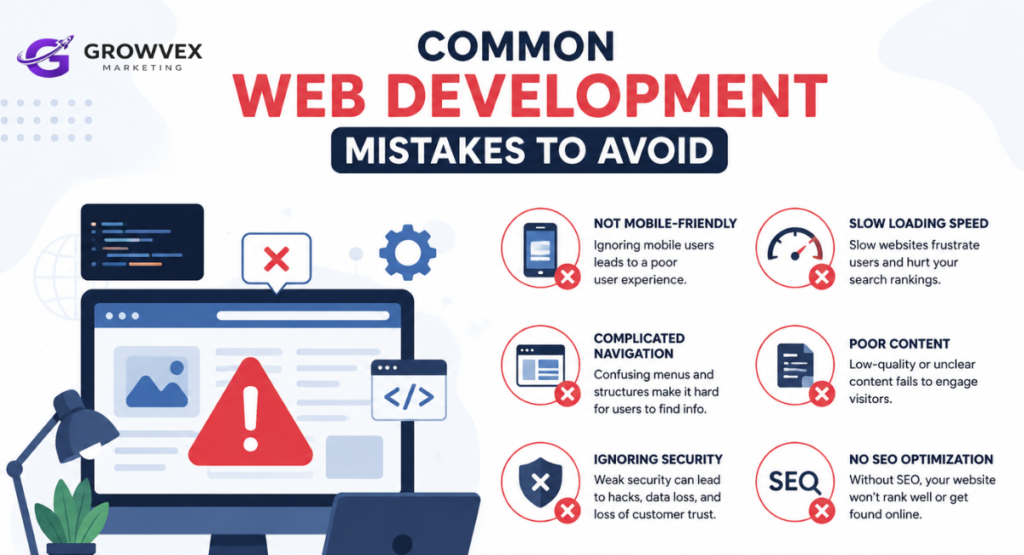
Small businesses can sometimes make simple mistakes when building their websites. Some common ones include:
- Using a design that does not work well on mobile devices.
- Adding too many unnecessary features.
- Ignoring website speed.
- Making navigation complicated.
- Using unclear calls to action.
- Forgetting basic security measures.
- Publishing content without considering SEO.
- Not updating the website after launch.
Avoiding these problems from the beginning can save time and create a better experience for visitors.
Conclusion
A successful business website should be more than visually appealing. It should be fast, secure, mobile-friendly, easy to navigate, and built around the needs of your customers. Web development for small businesses provides the foundation for creating this kind of online presence.
At Growvex Marketing, we help businesses build professional websites that combine design, functionality, performance, and SEO-friendly practices. If you are planning a new website or want to improve your current one, our web development services can help turn your business goals into a practical online solution.
Frequently Asked Questions
How much does web development cost for a small business?
The cost depends on the number of pages, design requirements, features, platform, and level of customization. A simple business website usually requires less development work than an eCommerce or highly customized website.
How long does it take to build a small business website?
The timeline depends on the website’s size and functionality. A basic website can take less time, while websites with custom features and integrations may require a longer development process.
Does a small business website need SEO?
Yes. Building an SEO-friendly website from the beginning can make it easier for search engines to understand and index your pages. Ongoing SEO can then help improve visibility and attract organic traffic.
Should a small business website be mobile-friendly?
Absolutely. Many people browse the internet using smartphones, so a website should provide a smooth experience across mobile, tablet, and desktop devices.
Can web development help a small business get more customers?
A well-developed website can support lead generation by clearly presenting your services, building trust, improving user experience, and giving visitors simple ways to contact or buy from your business.
You have not enough Humanizer words left. Upgrade your Surfer plan.